










































Assessment of Media Development in Palestine
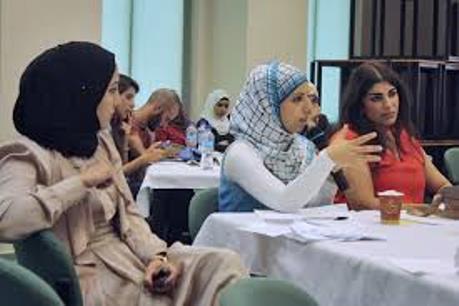
This report, available in English and Arabic, aims to inform and support the development of Palestine’s media sector through the conduct of a comprehensive assessment of the media environment, based on international legal standards and good practice. From Birzeit University’s Media Development Center and the United Nations Educational, Scientific and Cultural Organization (UNESCO), the project is "part of a wider UNESCO initiative to assess the strengths and weaknesses of national media sectors across the globe using a common analytical framework endorsed by a UNESCO intergovernmental Council - the UNESCO/IPDC" International Programme for the Development of Communication MDIs.
UNESCO sought to engage national stakeholders in "a process of constructive dialogue and critical reflection in order to identify key media development priorities". On policy, the document cites international treaties and Palestinian law guaranteeing freedom of expression but also states that "many laws in force in both the West Bank and Gaza Strip...restrict freedom of expression and opinion." On media presence and diversity: "The authorities, whether in the West Bank or in Gaza, are not active in promoting a diverse mix of private, public and community media and there is no elaborated policy that relates to this. Both public service broadcasting and community media are largely absent from the country’s media landscape." The report reviews the situation regarding licensing, taxation, and regulation, as well as reported weakness of the advertising market.
Media as a platform of discourse is characterised, in part, by the following:
- "Media content in Palestine appears to be characterized by an overemphasis on political power issues, to the detriment of programmes dealing with education, health, economics or social issues. Women are reported to be poorly portrayed in media content and lack opportunities in obtaining decision-making positions in Palestinian media institutions. Some radio and TV programmes have emerged that are directed at specific sectors of Palestinian society, such as women, youth or refugees, but these initiatives remain limited."
- A public service broadcasting model has not yet (2014) been implemented.
- "The Palestinian media does not have an established code of conduct or a self-regulation system..." despite civil society-led initiatives.
- "Local radio stations allocate time to talk-back radio programmes. These receive a large volume of calls from members of the public, which could indicate a level of trust and confidence in the media."
- Journalistic practice is impeded by an environment of "insecurity...This situation has led many media professionals to resort to self-censorship."
"Media development institutions provide various training programs...Safety is a major topic of training sessions offered by both local and international organizations. However, the absence of an overall strategy for the provision of training leads to duplication and inadequacies in the delivery
of courses. In addition, training opportunities addressing the needs of media managers are insufficient." Academic courses are available and graduates obtain journalism degrees, but there is a lack of resources and discrepancies between universities in terms of quality of content and structure. "No systematic monitoring of the performance of Palestinian media is carried out by CSOs [civil society organisations]. Those CSOs working in the media field focus their activities on providing support for media professionals, monitoring press freedom violations, seeking to promote freedom of expression, and organizing conferences and training workshops for journalists. Programmes also exist that target issues related to youth, women and marginalized groups in terms of their access to and visibility in the media."
"The telecom network in Palestinian territories is owned and operated by Palestinian operators but interconnects to the outer world through Israeli telecommunication operators. PalTel owns and operates the Internet network but must buy its bandwidth from Israeli telecommunication operators, which results in expensive connectivity costs for Palestinians." This being said, "Palestinian media outlets are increasingly using the Internet to connect with the public via websites and social media." The rate of internet access is 20% higher than average for the Middle East region. “Local media such as community radio have an important role to play. The public communicates with local media through mobile phone and landlines. There is a need for better infrastructure to reach areas outside the cities."
"The key recommendations are extracted from the more detailed recommendations at the end of each chapter.
- Consideration should be given to amending Article 19 of the Palestinian Basic Law to guarantee the right to freedom of opinion and expression in line with international standards.
- Drawing on extensive work already completed by civil society organizations, consideration should be given to adopting, as soon as possible, a law on the right to information which is in line with international standards in this area.
- Consideration should be given to adopting and implementing a law to regulate the audio-visual media which is in line with international standards, including by creating an independent regulatory body, by recognizing and promoting community broadcasting and by ensuring the equitable allocation of frequencies to all three tiers of broadcasters.
- All legal provisions which limit the right to practice journalism and which place restrictions on who may be an editor-in-chief should be repealed.
- All legal provisions which restrict the content of what may be published or broadcast, including those relating to libel and slander, or insult related to state office, should be reviewed and revised to bring them into line with international standards.
- The right to freedom of expression online should be protected both in law and in practice.
- Fair and balanced portrayal of men and women should be promoted in media content, and equal employment opportunities in media, including in higher-level positions, should be ensured.
- Palestinian Public Radio and Television Corporation, along with Palestine News and Info Agency (WAFA) and Al-Hayat al-Jadeeda, should be transformed into independent, public service media.
- Interested stakeholders should work together to develop an effective self-regulatory system for the media.
- Effective measures should be taken to prevent attacks on journalists and to address the culture of impunity.
- A comprehensive review of media training should be conducted to identify gaps and shortcomings, and the results of this should then be used to develop a comprehensive long-term plan for media training.
- University programmes on media should be modernized and consideration should be given to developing a Master’s programme on media in the West Bank.
- The Jordanian Journalists’ Syndicate Law No. 17 of 1952 should be abolished along with the special legal status of the Palestinian Journalists’ Syndicate (PJS) and replaced with a free and open approach to unionisation.
- Broad consultations should be continued with a view to developing a new strategic ICT [information and communication technology] and digital transition plan so as to promote the availability of modern ICTs and the spread of Internet and media access throughout the whole of the territory of Palestine.
- The international community should take measures to ensure that Palestine can access the international connections it needs to achieve its ICT goals."
UNESCO website, July 16 2014, and email from Saorla McCabe to The Communication Initiative on July 21 2014. Image credit: © Birzeit University MDC
- Log in to post comments