










































Accelerating the Education Sector Response to HIV: Five Years of Experience from Sub-Saharan Africa
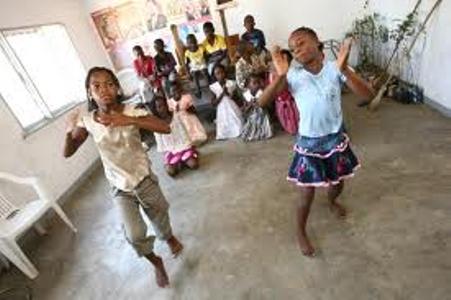
This review discusses the education sector's role in preventing HIV in Sub-Saharan Africa, particularly focused on the “Accelerate Initiative”. It was assembled using data collated during the 2007 School Health and HIV/AIDS Focal Point Survey. The review had input from the Ministry of Education Focal Points for school health and HIV/AIDS from countries in Sub-Saharan Africa participating in the Accelerate Initiative, together with representatives of stakeholders and partners. Key partners of the Initiative include governments, United Nations (UN) agencies, bilateral partners, and civil society, as well as key stakeholders, including people living with HIV/AIDS, teachers’ unions, and the media.
The five objectives identified by the Accelerate Initiative are as follows:
Objective 1: To promote leadership by the education sector and create sectoral demand for a response to HIV/AIDS. Sub-regional workshops supported ministries to develop and implement action plans.
Objective 2: To harmonise support among development partners, so as to better assist countries and reduce transaction costs. Subregional and regional workshops every other month enabled donors, agencies, and ministries to engage.
Objective 3: To promote coordination with the national AIDS authorities and enhance access to HIV/AIDS funds. Participating Ministries of Education began communicating with their national AIDS authorities, some receiving funding from their National AIDS Councils (NACs).
Objective 4: To share information on HIV/AIDS that has specific relevance to the education sector. "A set of key documents on HIV/AIDS and education has been made available to educators in English, French, and Portuguese" in print and online.
Objective 5: To strengthen the technical content and implementation of the education sector response to HIV/AIDS. Data from the November 2007 survey shows that 76 percent of countries involved have an education sector-specific HIV/AIDS strategy and plan, and 30 countries are training teachers to protect themselves. All countries are providing some HIV prevention education at primary or secondary levels, or both. Thirty-one countries are providing this education before the initiation of puberty.
The outcomes of these objectives are documented through a history of the Accelerate initiative and through detailing data and short case study summaries for each objective.
Email from Charlotte Broyd to The Communication Initiative on March 29 2012. Image credit: the Joint United Nations Programme on HIV/AIDS (UNAIDS) Inter-Agency Task Team (IATT)
- Log in to post comments